The most common mistake we see in Winston-Salem is treating the subsurface like coastal plain soil. Crews set up a rig on a site near Hanes Mall, punch through three feet of topsoil, and hit refusal in what they assume is solid rock. They stop the log. They call it bedrock. But here in the Piedmont Triad, that refusal layer is often just a boulder or a thin cap of partially weathered granite over deep saprolite. It is not competent rock. Standard penetration testing done right tells the difference. Our team uses ASTM D1586 procedures, and we never stop the hammer at the first refusal without a coring check. When the data matters for a new medical office building off Stratford Road or a warehouse expansion near Union Cross, guessing is not a geotechnical report. For sites with deep residual soils, we often pair SPT with a CPT test to get a continuous profile of the transition zone between saprolite and weathered rock.
An SPT refusal in Winston-Salem is not automatically bedrock. It is often a boulder in saprolite, and that mistake changes the entire foundation design.
Scope of work
Area-specific notes
We consistently find that contractors who skip SPT in saprolite zones end up with two problems. First, they overestimate bearing capacity because they assume weathered rock is solid, when in reality saprolite can compress under load like dense sand. Second, they underestimate excavation difficulty because the material holds a vertical cut temporarily but ravels after a rainstorm. Winston-Salem gets about 45 inches of rain annually, and spring thunderstorms saturate these residual soils fast. An open footing excavation near a slope can collapse overnight if the SPT data did not flag the low cohesion of the decomposed material. We have seen delays and change orders that could have been avoided with just three additional borings and proper SPT refusal verification in the transition zone.
Standards used
ASTM D1586-18: Standard Test Method for SPT and Split-Barrel Sampling of Soils, ASTM D2487-17: Standard Practice for Classification of Soils for Engineering Purposes (Unified), ASCE 7-22: Minimum Design Loads for Buildings (site class determination per Chapter 20), IBC 2021: International Building Code, Section 1803 (geotechnical investigations)
Linked services
SPT Drilling and Field Logging
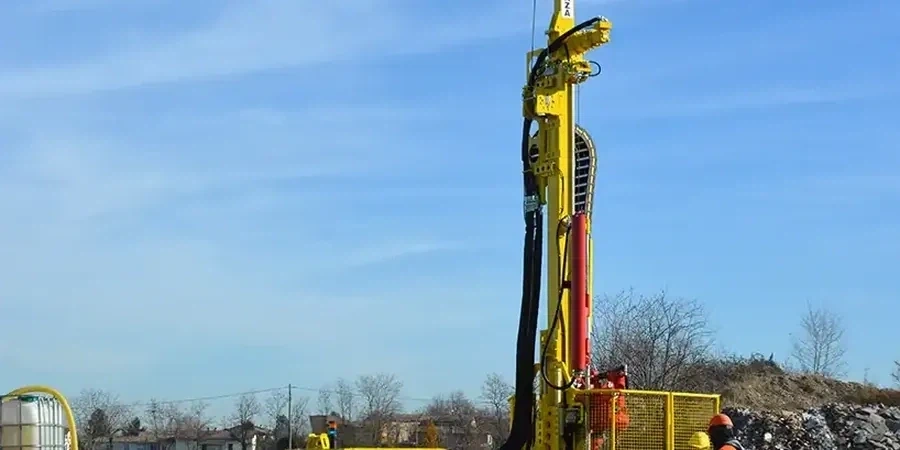
Truck-mounted or track-mounted CME rigs for access to wooded lots and tight urban sites. We log every sample run, measure groundwater, and classify soil in the field per ASTM D2488 before samples ever reach the lab.
Bearing Capacity and Settlement Analysis
We convert N-values to allowable bearing pressure using local correlations validated for Piedmont residual soils. Settlement estimates account for saprolite compressibility, which standard SPT-to-modulus charts often miss.
Typical parameters
Common questions
How deep do you typically drill SPT borings in Winston-Salem?
For a standard shallow foundation investigation, we target 20 to 40 feet below grade, or until we penetrate 10 feet into weathered rock with consistent N-values above 50. On sites near the Yadkin River floodplain, we often go deeper to evaluate alluvium thickness and potential liquefiable layers.
What does SPT testing cost for a residential lot in Winston-Salem?
For a typical single-family home site requiring two borings to 25 feet, the cost ranges from US$570 to US$820. This includes the drilling, SPT sampling at 5-foot intervals, field classification, and a brief report with bearing capacity recommendations. Sites with difficult access or additional borings will be higher.
Can SPT tell the difference between saprolite and true bedrock?
Not by blow count alone. Saprolite can give N-values above 50 and mimic rock refusal. The only reliable method is to follow every SPT refusal with a core barrel run to examine the material. Our standard protocol is: if the sampler refuses, we core the next 5 feet. That is how we avoid misidentifying boulders as bedrock.