In-situ testing forms the backbone of geotechnical site characterization in Winston-Salem, providing engineers and contractors with direct measurements of subsurface conditions without disturbing the natural state of soils and rock. This category encompasses field methods that evaluate density, strength, permeability, and deformation properties right where materials lie, delivering data that laboratory tests alone cannot replicate. In a city experiencing steady commercial and residential growth along corridors like Hanes Mall Boulevard and Stratford Road, in-situ testing ensures foundations, pavements, and earthworks perform reliably under local conditions.
Winston-Salem rests on a varied geological foundation shaped by the Piedmont physiographic province, where residual soils derived from weathered igneous and metamorphic rocks dominate the landscape. Saprolitic silty sands and micaceous clays overlying partially weathered gneiss and schist create challenging subsurface profiles that demand careful evaluation. The transition zones between soil and weathered rock, in particular, require precise in-situ measurements to avoid mischaracterization that could lead to bearing capacity failures or excessive settlement in structures ranging from downtown office buildings to industrial facilities near Smith Reynolds Airport.
Regulatory compliance in North Carolina drives much of the need for in-situ testing, with the North Carolina Building Code referencing standards from ASTM International and AASHTO for earthwork and foundation design. The North Carolina Department of Environmental Quality also enforces compaction standards for stormwater infiltration practices, while local Winston-Salem ordinances require geotechnical reports for projects disturbing more than one acre. Methods like the field density test (sand cone method) prove essential for verifying compaction meets the 95 percent modified Proctor density commonly specified for structural fill, directly tying field verification to code-mandated performance criteria.
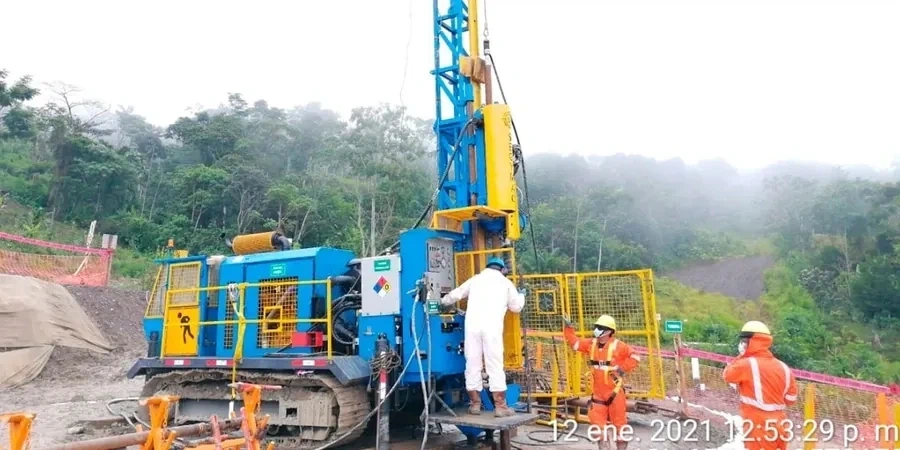
Projects across Winston-Salem's diverse development landscape rely on in-situ testing to manage risk and control costs. Institutional expansions at Wake Forest University and Winston-Salem State University demand bearing capacity verification through standard penetration testing and plate load tests, while transportation infrastructure along US-421 and I-40 corridors requires stiffness and modulus measurements for pavement design. Residential subdivisions pushing into the rolling terrain of Forsyth County need density testing for cut-and-fill operations, and commercial developers constructing big-box retail along Hanes Mall Boulevard depend on in-situ permeability testing for stormwater management system approval.
Available services
Common questions
What does in-situ testing mean and why is it preferred over laboratory testing?
In-situ testing measures soil and rock properties directly in their natural position without removal or disturbance, preserving moisture content, stress state, and fabric. This approach captures behavioral characteristics that laboratory tests on disturbed samples may miss, particularly in Winston-Salem's residual soils where sample disturbance can significantly alter measured strength and compressibility.
Which in-situ tests are most commonly required for commercial construction in Winston-Salem?
Standard penetration testing for bearing capacity, field density tests using the sand cone method for compaction verification, and cone penetration testing for stratigraphic profiling are routinely specified. Projects involving stormwater infiltration often require in-situ hydraulic conductivity testing to comply with North Carolina DEQ regulations for post-construction runoff management.
How do local soil conditions in the Piedmont region affect in-situ testing procedures?
Residual soils with partially weathered rock fragments require careful selection of testing methods. Standard penetration testing may encounter refusal at shallow depths, necessitating rock coring, while density testing in micaceous soils demands attention to moisture content. The saprolitic transition zone between soil and weathered rock particularly challenges interpretation of in-situ strength measurements.
What qualifications should a firm performing in-situ testing in Winston-Salem possess?
Firms should hold professional engineering licensure in North Carolina and maintain accreditation through AASHTO or similar programs for specific test methods. Technicians performing nuclear density testing require NCDOT certification, while geotechnical engineers overseeing standard penetration testing should demonstrate familiarity with Piedmont residual soil behavior and local building code requirements.
Location and service area
We serve projects across Winston-Salem and surrounding areas.