A distribution center off I-40 near Hanes Mill Road called us after their initial rigid pavement design kept cracking within the first six months. The culprit wasn't the concrete mix itself, but a misread on the residual micaceous soils underneath. Winston-Salem sits on the edge of the Triassic Basin, where weathered felsic bedrock and silty clay deposits alternate across relatively short distances. A design that works fine on the Hanes Mall side can fail completely two miles east near Union Cross. Our lab runs the full chain: soil classification under ASTM D2487, subgrade modulus evaluation, and concrete flexural strength testing. For industrial yards with heavy forklift traffic we often pull in the CBR road testing data to validate subgrade support before finalizing slab thickness, because guessing here means tearing out concrete later.
We match pavement structural sections to actual subgrade k-values from local plate load tests, not to textbook defaults.
Scope of work
Area-specific notes
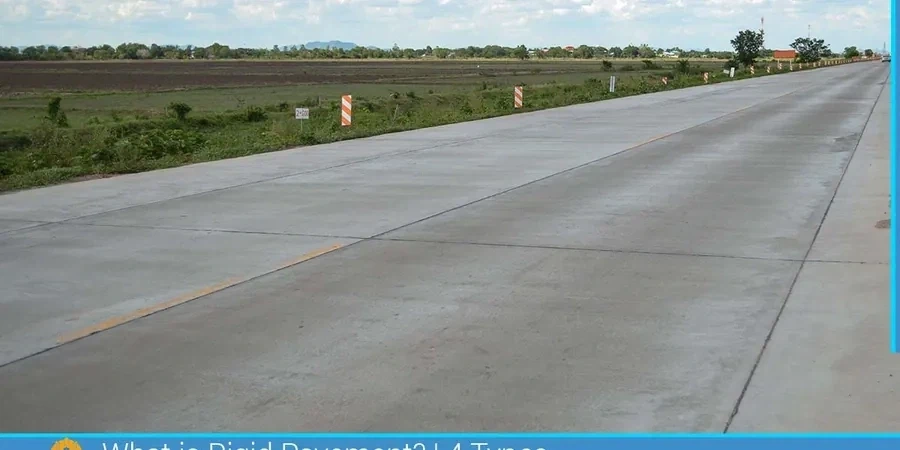
Winston-Salem's Triassic Basin geology brings a specific risk to rigid pavement: differential heave from expansive smectite clays that appear in the Cow Branch Formation. We've seen slabs lift a half-inch in one corner while the opposite edge stays put, and that's a direct path to corner breaks and faulting. The seasonal wet-dry cycles in the Piedmont, with summer humidity pushing soil moisture content well above the plastic limit, can reduce the effective k-value by 30 to 50 percent over a wet winter. If the design assumes a dry-summer condition, the slab ends up underbuilt for the critical season. Compounding that, Winston-Salem's freeze-thaw episodes, though less severe than in the Midwest, still demand careful air-void spacing factors below 0.008 inches per ASTM C457. Our design reports flag these subgrade sensitivity zones and recommend stabilization depths accordingly, because reactive clay under a rigid pavement isn't a maintenance issue, it's a full-depth reconstruction waiting to happen.
Standards used
ACI 360R-10: Guide to Design of Slabs-on-Ground, ASTM D2487-17: Classification of Soils for Engineering Purposes, NCDOT Standard Specifications for Roads and Structures, Division 5, ASTM C666/C666M-15: Resistance of Concrete to Rapid Freezing and Thawing, ASTM C78/C78M-18: Flexural Strength of Concrete (Simple Beam with Third-Point Loading)
Linked services
Subgrade Support Evaluation & k-Value Testing
We run plate load tests and correlate with CBR and resilient modulus data to establish a defensible modulus of subgrade reaction for your Winston-Salem site. This isn't a lookup-table exercise; it's field-measured numbers that feed directly into Westergaard slab analysis and joint design.
Concrete Mix Design Optimization for Rigid Pavement
Our lab develops and tests concrete mixes targeting flexural strength, freeze-thaw durability, and low shrinkage. We adjust aggregate gradation, cementitious content, and air-entrainment dosage for Winston-Salem's winter exposure class, with compressive and flexural breaks at 7, 14, and 28 days.
Typical parameters
Common questions
What's the typical cost range for a rigid pavement design package in Winston-Salem?
For a complete design package covering geotechnical investigation, subgrade evaluation, concrete mix design, and joint layout, budgets in the Winston-Salem area generally run between US$1,950 and US$6,560. The spread depends on pavement area, number of load cases, and whether we're running plate load tests or working with existing boring data.
How does the local Triassic Basin geology affect rigid pavement performance here?
The weathered felsic bedrock and residual silty clays in the Winston-Salem Triassic Basin create subgrade conditions that vary sharply over short distances. Some zones carry smectite clays with moderate expansion potential, which drives differential heave at slab joints. Our design approach maps these subgrade sensitivity zones so joint spacing, dowel sizing, and base stabilization match the actual soil profile rather than a county-wide assumption.
What joint load transfer system do you specify for heavy industrial pavements?
For industrial yards and distribution centers in Winston-Salem where forklift axle loads can exceed 25 kips, we typically specify round dowel bars per ACI 360R with diamond-plate dowel baskets at contraction joints. Dowel diameter runs one-eighth of the slab thickness, spaced at 12 inches on center. Tie bars at longitudinal joints are designed for the friction restraint of the specific subbase material, usually No. 4 or No. 5 bars at 30-inch spacing.