Seismic engineering in Winston-Salem encompasses the comprehensive assessment, design, and mitigation strategies required to protect structures and infrastructure from earthquake-induced ground motions. While North Carolina is not typically associated with high seismicity like the West Coast, the region experiences moderate seismic hazard primarily from the Eastern Tennessee Seismic Zone and occasional intraplate earthquakes that can travel great distances due to the rigid crust of the eastern United States. Understanding local seismic demands is critical for safeguarding public safety, ensuring structural resilience, and complying with modern building codes that recognize the unpredictable nature of these events.
The geological setting of Winston-Salem, situated in the Piedmont physiographic province, is characterized by weathered residual soils, saprolite, and shallow bedrock composed largely of metamorphic and igneous formations. These site conditions heavily influence how seismic waves amplify or attenuate at the surface. The deep weathering profile and varying stiffness of subsurface materials create a complex geotechnical environment where phenomena such as site amplification and, in specific saturated granular deposits, soil liquefaction analysis become essential components of a robust seismic hazard evaluation. The presence of fill soils and alluvial deposits along the Yadkin River and its tributaries further necessitates detailed subsurface investigations to inform foundation design and ground improvement decisions.
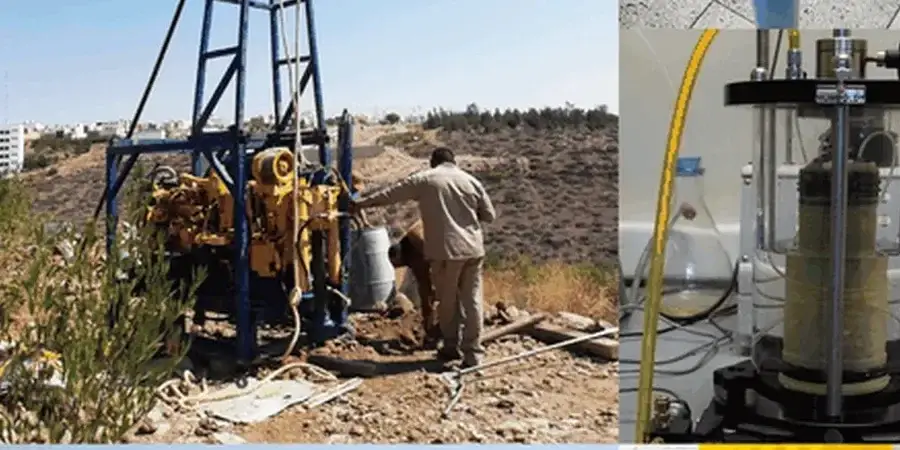
Regulatory compliance in Winston-Salem is governed primarily by the North Carolina State Building Code, which adopts and amends the International Building Code (IBC). The IBC references ASCE 7 standards for determining seismic design parameters, including mapped spectral accelerations and site classification. For essential facilities, schools, and critical infrastructure, adherence to these standards requires thorough seismic site response analyses and, in many cases, peer-reviewed geotechnical reports. Local municipalities may enforce additional provisions based on regional risk assessments, making it imperative for developers and engineers to engage specialized seismic expertise early in the project planning phase.
Projects that typically require advanced seismic works range from high-rise commercial buildings and healthcare facilities to bridges, dams, and industrial plants. The growing emphasis on resilient design has also driven interest in base isolation seismic design for landmark structures and data centers where operational continuity after an event is paramount. Additionally, urban planning initiatives and large-scale infrastructure developments often rely on seismic microzonation studies to map variations in ground shaking potential across the city, enabling informed land-use decisions and risk-based prioritization of retrofit programs. These integrated approaches ensure that both new construction and existing building inventories meet performance objectives tailored to local conditions.
Common questions
What is the seismic risk level in Winston-Salem, North Carolina?
Winston-Salem is classified as a region of moderate seismic hazard. The risk stems from the Eastern Tennessee Seismic Zone and intraplate earthquakes. While large events are infrequent, the rigid eastern crust transmits energy efficiently, making distant earthquakes more widely felt. Local site conditions, such as deep residual soils, can amplify ground motions, increasing potential damage if not properly addressed in design.
Which building codes govern seismic design for projects in Winston-Salem?
Seismic design in Winston-Salem adheres to the North Carolina State Building Code, which adopts the International Building Code (IBC) with amendments. The IBC references ASCE 7 for determining seismic design parameters, including spectral accelerations and site coefficients. Geotechnical investigations must follow these standards to classify the site and develop ground motions suitable for the structural analysis of each project.
When is a site-specific seismic hazard analysis required instead of using default code values?
A site-specific analysis is typically required for structures with long fundamental periods, essential facilities, or sites with complex subsurface conditions like deep soft clays or liquefiable sands. If default code values are deemed overly conservative or insufficient due to basin effects or topographic amplification, a detailed probabilistic seismic hazard analysis and site response study deliver more accurate design spectra tailored to the site.
How do local soil conditions in the Piedmont region influence earthquake shaking?
The Piedmont's weathered residual soils and saprolite can significantly modify earthquake shaking. These soils often have a gradual stiffness increase with depth, which can amplify ground motions at specific frequencies. Additionally, sharp impedance contrasts at the soil-bedrock interface may trap seismic energy. Site classification based on shear wave velocity measurements is critical to quantifying these amplification effects for structural design.
Location and service area
We serve projects across Winston-Salem and surrounding areas.