Slope engineering in Winston-Salem addresses the critical intersection of natural topography and urban development, focusing on the analysis, stabilization, and reinforcement of inclined ground surfaces. The city's rolling Piedmont terrain, characterized by gentle to moderately steep hillsides, presents unique challenges for residential subdivisions, commercial site development, and transportation infrastructure. Effective slope management prevents landslides, erosion, and structural failures that could compromise property and public safety. A comprehensive approach to slope stability integrates geotechnical investigation, hydrological assessment, and structural reinforcement tailored to local soil and rock conditions.
Winston-Salem sits within the Piedmont physiographic province, where residual soils derived from weathered metamorphic and igneous bedrock dominate the landscape. These soils, primarily silty sands and sandy silts with varying clay content, exhibit complex behavior when subjected to moisture changes and construction-induced stress. The presence of partially weathered rock near the surface creates transitional zones that complicate both excavation and foundation design. Seasonal rainfall patterns, including intense summer thunderstorms, can rapidly saturate these soils, reducing effective stress and triggering shallow slope failures. Understanding these local geotechnical characteristics is essential for developing reliable stabilization strategies.
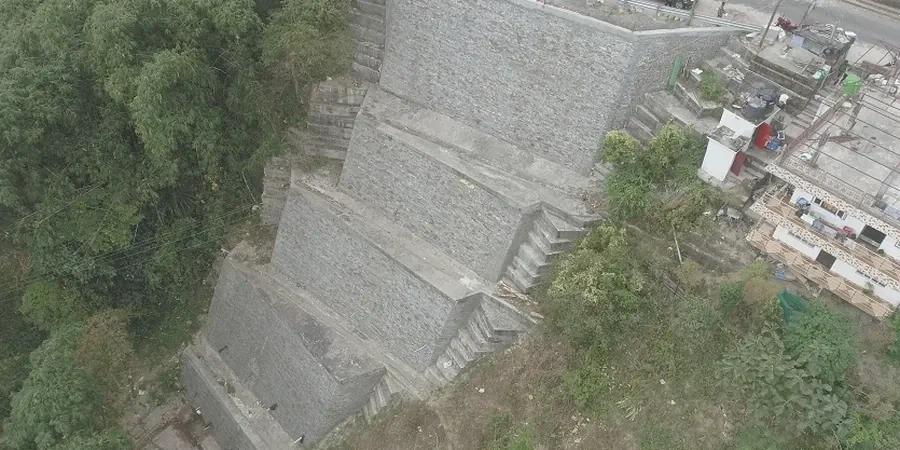
Slope design and remediation in North Carolina must comply with the North Carolina Building Code, which adopts the International Building Code with state-specific amendments. The North Carolina Department of Environmental Quality oversees erosion and sediment control through the Sedimentation Pollution Control Act, requiring detailed slope stabilization plans for disturbed areas exceeding one acre. Local municipalities, including Winston-Salem and Forsyth County, enforce additional grading ordinances that mandate minimum slope setback requirements, drainage provisions, and retaining structure standards. Geotechnical reports submitted for permitting must demonstrate adequate factors of safety under both static and seismic loading conditions, consistent with ASCE 7 and AASHTO guidelines where applicable.
Residential hillside developments in areas like Buena Vista and areas near Salem Lake frequently require slope stability analysis to evaluate cut and fill feasibility. Commercial projects along the Hanes Mall Boulevard corridor and institutional expansions at Wake Forest University often incorporate retaining wall design to maximize usable site area while maintaining grade separations. Infrastructure projects, including road widening along Silas Creek Parkway and stormwater management facilities, rely on active/passive anchor design to reinforce steep cuts and existing slopes where space constraints preclude conventional retaining structures. Each project type demands a tailored geotechnical solution that balances long-term performance with constructability and environmental compliance.
Common questions
What are the most common causes of slope failures in Winston-Salem?
The predominant triggers include heavy rainfall infiltration saturating residual Piedmont soils, improper surface drainage directing water onto slopes, and construction activities that alter natural slope geometry or remove vegetation. The transition zone between soil and weathered rock often creates a weakness plane where failures initiate when pore water pressures increase during wet seasons.
When is a slope stability analysis required for development in Winston-Salem?
A slope stability analysis is typically required when proposed grading creates cut or fill slopes exceeding 15 feet in height, when structures are located near slope crests or toes, or when site investigations reveal weak soil layers, slickensides, or elevated groundwater conditions. Forsyth County grading ordinances mandate geotechnical evaluation for slopes steeper than 2:1.
What regulations govern slope construction and erosion control in North Carolina?
The North Carolina Sedimentation Pollution Control Act governs erosion control, requiring an approved plan for land-disturbing activities over one acre. The North Carolina Building Code establishes structural requirements for retaining walls and foundations on slopes. Local Winston-Salem ordinances add specific grading, drainage, and vegetation preservation standards for hillside development.
How do soil conditions in the Piedmont region affect retaining wall design?
Piedmont residual soils exhibit variable strength depending on weathering degree and moisture content, requiring conservative design assumptions for bearing capacity and lateral earth pressures. The presence of partially weathered rock can complicate excavation and drainage design. Wall systems must accommodate both short-term construction loads and long-term soil creep that can increase pressure over time.
Location and service area
We serve projects across Winston-Salem and surrounding areas.